



The Fundamentals of Real Estate and Property Taxes

“Real estate taxes” and “property taxes” are terms often used interchangeably, leading to widespread confusion. However, understanding the distinctions and intricacies of these financial obligations is crucial for every homeowner and real estate investor. These taxes represent a significant ongoing expense that can directly impact your budget, cash flow, and even the long-term profitability of your investments.
We understand that navigating property taxation can seem complex, with rules varying from state to state and calculations that often feel opaque. That’s why we’ve put together this comprehensive guide.
In the following sections, we will demystify real estate and property taxes. We’ll clarify the core differences, explain how these taxes are calculated, and explore the many factors that influence your annual bill. We will also delve into the financial implications for landlords, shed light on available exemptions, and provide actionable strategies for appealing assessments and managing your tax burden effectively. Our goal is to empower you with the knowledge needed to make informed decisions, whether you’re purchasing your first home, exploring options on a national real estate platform, or expanding an investment portfolio.
At their core, both real estate and property taxes are forms of ad valorem taxes, meaning they are levied based on the value of the asset. These taxes are a primary revenue source for local governments, funding essential public services such as schools, police and fire departments, road maintenance, and other public infrastructure. Understanding the foundational concepts of what constitutes taxable property and how local governance impacts these levies is the first step toward effective tax management.
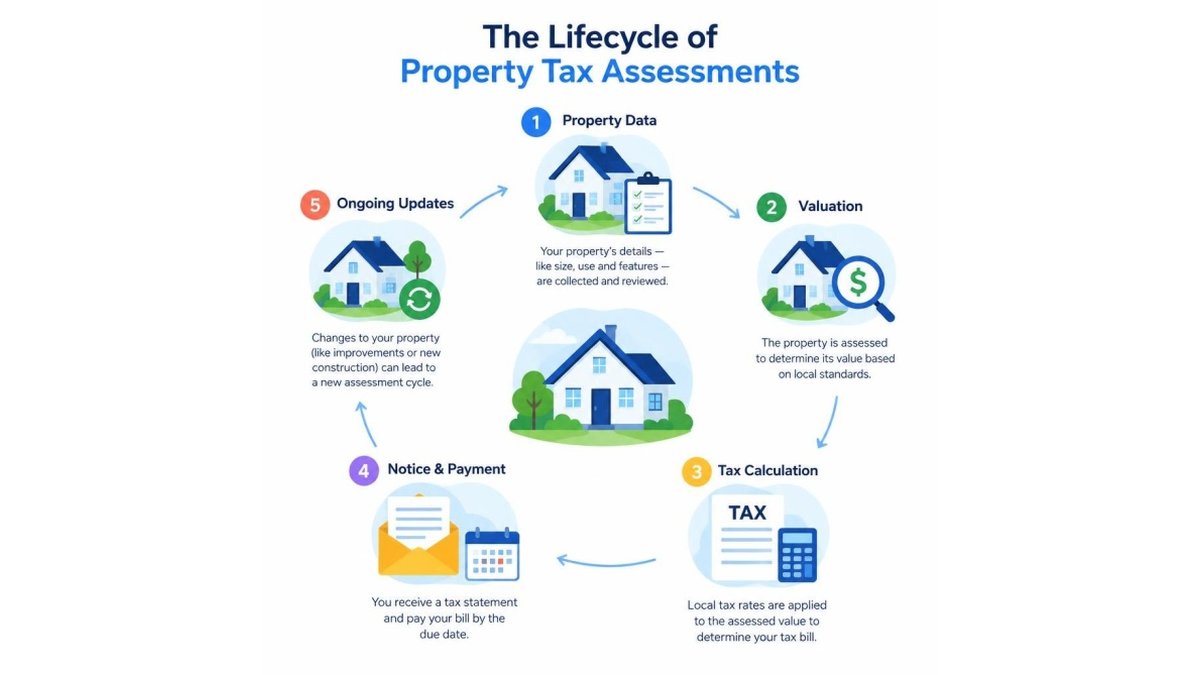
Property taxes are a broader category that encompasses various types of assets, while real estate taxes specifically refer to taxes on immovable property. This distinction, though subtle, can have significant implications for different types of property owners. Local jurisdictions establish their tax bases by assessing the value of all taxable property within their boundaries. This “Grand List,” as it’s sometimes called, forms the foundation upon which annual tax levies are determined.
To illustrate the key differences, consider the following comparison:
More Read

| Feature | Real Estate Taxes | Personal Property Taxes |
|---|---|---|
| Definition | Taxes on land and permanent structures (real property) | Taxes on movable assets (personal property) |
| Scope | Buildings, land, fixtures | Vehicles, boats, business equipment, inventory |
| Assessment Basis | Market value, location, improvements | Purchase price, depreciation schedules, standardized tables |
| Payer | Property owner (often via mortgage escrow) | Owner of the personal property |
| Typical Frequency | Annually or semi-annually | Annually, often with separate billing cycles |
| Collection | Usually by a single local tax office | May involve multiple agencies for different asset types |
Real Property vs. Personal Property Classifications
The distinction between real property and personal property is fundamental to understanding property taxation. Real property refers to land and anything permanently attached to it, including buildings, fences, and other fixtures. When we talk about real estate taxes, we are specifically referring to the taxes imposed on these land parcels and permanent structures. These are generally considered fixed assets that contribute to the long-term value and infrastructure of a community.
Personal property, on the other hand, encompasses movable assets. For individuals, this might include vehicles, boats, or recreational vehicles. For businesses, it extends to equipment, machinery, furniture, and even inventory. While many states only levy real estate taxes, some jurisdictions, particularly at the county or municipal level, also impose taxes on certain categories of personal property. For example, a small business owner in Texas might track equipment depreciation to lower their personal property tax liability, while a homeowner in Oklahoma primarily focuses on real estate taxes. This broader definition of “property taxes” includes both real and personal property, making it essential to clarify which type of asset is being discussed.
How Local Jurisdictions Determine Annual Tax Levies
The process by which local jurisdictions determine their annual tax levies is a complex interplay of budgeting and valuation. It begins with municipal budgets, where local governing bodies (such as city councils, county commissions, and school boards) project their spending needs for the upcoming fiscal year. These needs include funding for schools, public safety, social services, and the maintenance and development of public infrastructure.
Once the total budgetary requirement is established, the local government assesses the total value of all taxable property within its jurisdiction. This comprehensive list of property values is often referred to as the “Grand List.” The tax rate, frequently expressed as a “mill rate” (dollars per $1,000 of assessed value), is then calculated by dividing the total budget by the total assessed value on the Grand List. For example, if a town needs $20 million and its Grand List totals $1 billion, the mill rate would be $20 per $1,000 of assessed value.
School levies typically constitute a significant portion of the total property tax bill, often accounting for 60-75% in many areas, such as Long Island, New York. These dedicated levies ensure that local educational institutions receive the necessary funding. The involvement of various local boards—such as Boards of Selectmen, Finance, and Education—in the budget-setting process means that property owners often have multiple opportunities to engage with their local government and understand how their tax dollars are allocated.
Assessment Mechanics and State-Specific Tax Frameworks
Understanding how your property’s value is assessed and the specific rules governing property taxes in your state is paramount. The assessment process is the foundation of your tax bill, and variations in state laws can lead to vastly different outcomes for property owners. We’ll explore the tools and methods assessors use, as well as the diverse approaches states take to limit or manage tax increases.

Property assessment involves determining a property’s market value, which is then used to calculate its assessed value. This assessed value, often a percentage of the market value, is what the tax rate (or mill rate) is applied to. Some states also use a concept called “net tax capacity” to determine tax liability, particularly for different classes of property. These frameworks are designed to ensure fairness, but they also introduce complexity.
Regional Assessment Frameworks and Statutory Caps
Property tax rules exhibit significant variation across states, reflecting diverse policy priorities and historical contexts. These regional assessment frameworks often include statutory caps designed to limit the growth of property tax burdens.
One of the most well-known examples is California’s Proposition 13, passed in 1978. This landmark legislation restricts annual growth in the assessed value of real estate to the lesser of the rate of inflation or 2%. This means that unless a property changes ownership or undergoes significant new construction, its assessed value increases at a very limited pace, often resulting in substantially lower tax bills for long-term owners compared to recent buyers.
In Georgia, assessed values are set at a specific fraction of the fair market value for property tax calculation purposes, typically 40%. This means if a property has a fair market value of $300,000, its assessed value for tax purposes would be $120,000, and the tax rate would be applied to this lower amount.
Minnesota employs a more intricate system that involves “net tax capacity.” For a residential homestead, for example, the class rate for net tax capacity is 1.00% for the first $500,000 of taxable market value and 1.25% for value over $500,000. Additionally, Minnesota has a Homestead Market Value Exclusion, which reduces the taxable market value. For a homestead valued at $95,000 or less, the exclusion is 40% of market value, up to a maximum of $38,000. For properties valued between $95,000 and $517,200, the exclusion is $38,000 minus 9% of the value over $95,000. Properties valued at $517,200 or more receive no exclusion. This complex calculation aims to provide relief to lower and middle-valued homesteads.
New York, particularly in areas like Long Island, uses equalization rates to ensure fair distribution of the tax burden across different municipalities, as assessing practices can vary. Nassau County, for instance, uses a 10% Level of Assessment, meaning the assessed value is 10% of the market value.
These examples highlight that understanding your specific state’s and even county’s framework is critical, as a “property tax” in one area might be calculated completely differently than in another.
Common Assessment Exemptions and Tax Relief Programs
Beyond the core assessment methods, many jurisdictions offer various exemptions and tax relief programs designed to reduce the property tax burden for eligible homeowners. These programs are often targeted at specific demographics or property types and can significantly lower a property owner’s annual bill.
A widespread form of relief is the homestead exclusion or exemption. This typically reduces the taxable value of an owner-occupied primary residence. For instance, in Minnesota, as noted above, eligible homesteads can receive a significant reduction in their taxable market value through the Homestead Market Value Exclusion. This program helps ensure that owner-occupants pay less tax on their primary residence than, for example, an investor would on a rental property of similar value.
Circuit breaker programs are another form of relief, often designed to protect low- and middle-income homeowners, particularly seniors on fixed incomes. These programs cap property tax payments at a certain percentage of a homeowner’s income, preventing taxes from becoming an excessive burden regardless of rising property values. For example, if property taxes exceed 3% of a household’s income, a circuit breaker might reduce the tax bill to meet that threshold.
Senior deferral programs allow older adults, often those over 65, to postpone paying their property taxes until the home is sold or the owner passes away. This helps cash-poor seniors remain in their homes, even if their property value ( and thus tax bill) has increased substantially. The deferred taxes, plus interest, are typically repaid from the proceeds of the home’s sale.
Exemptions for disabled veterans are common across the United States. These can range from partial to full tax relief, depending on the veteran’s disability rating and state-specific criteria. In California, for example, disabled veterans may receive up to a 90% exemption on their property’s assessed value. These programs acknowledge the service and sacrifice of veterans by reducing their financial obligations.
It’s crucial for property owners to proactively research and apply for any exemptions or relief programs for which they might qualify. These benefits are rarely applied automatically and require an active application process, often with specific deadlines and documentation requirements.
Financial Implications for Property Investors and Homeowners
Property taxes are more than just an annual bill; they are a significant financial factor that impacts everything from monthly cash flow to long-term investment returns and property appreciation. For both homeowners and real estate investors, understanding these implications is key to sound financial planning and maximizing the value of real estate assets. Property taxes are a major operating expense, directly affecting net operating income and, consequently, capitalization rates for investors.

For homeowners, rising property taxes can strain household budgets, especially for those on fixed incomes. For investors, they directly reduce the profitability of rental properties. However, it’s also important to recognize that these taxes fund the very services and infrastructure that contribute to a property’s desirability and long-term value.
Analyzing Real Estate and Property Taxes on Rental Investment Portfolios
For landlords and real estate investors, property taxes are a critical component of financial analysis. They represent a fixed, ongoing expense that directly reduces the net monthly cash flow generated by a rental property. When evaluating potential investments, we rigorously include property tax estimates in our ROI (Return on Investment) calculations. A higher property tax burden can significantly erode profit margins, making an otherwise attractive property less viable.
Most mortgage lenders require property taxes to be paid through an escrow account, where a portion of the annual tax bill is collected with each monthly mortgage payment. This ensures that taxes are paid on time, but it also means that investors must budget for this expense as part of their regular operating costs. Beyond the monthly impact, investors should also maintain operating reserves to account for potential tax increases or reassessments, which can occur periodically.
A crucial advantage for real estate investors is that property taxes paid on investment properties are generally deductible expenses on federal income tax returns. This deduction can help offset taxable income, improving the overall after-tax return on the investment. However, staying informed about local tax authority announcements for rate changes and reassessment schedules is paramount. A sudden spike in property taxes can negatively impact cash flow and, by extension, the overall investment returns if not properly anticipated.
Municipal Services, Infrastructure Quality, and Long-Term Value
While property taxes are an expense, recognize their role in funding the municipal services and infrastructure that underpin a property’s long-term value and desirability. High property taxes often correlate with well-funded public services, which in turn can attract residents and businesses, supporting property appreciation.
Consider the impact of school ratings: properties located within highly-rated school districts often command higher prices and experience stronger demand, partly because property taxes in those areas fund superior educational resources. Similarly, well-maintained roads, effective police and fire departments, parks, and other neighborhood amenities, all funded by property taxes, contribute significantly to a community’s quality of life. These factors enhance buyer demand and can mitigate the negative impact of higher tax burdens on property values.
Conversely, areas with lower property taxes might offer fewer public services, potentially leading to slower appreciation or even depreciation over time. Investors should treat property taxes not just as a cost, but also as a strategic factor in location selection. A property in a high-tax, high-service area might offer better long-term appreciation potential due to strong community appeal, despite the higher annual outlay. It’s a delicate balance where the “value” derived from tax dollars can significantly influence a property’s long-term investment viability and appeal to future buyers.
Strategic Planning, Appeals, and Misconceptions
Effective management of real estate and property taxes goes beyond simply paying the bill. It involves proactive strategic planning, understanding your rights, and debunking common misconceptions that can lead to missed opportunities or unnecessary expenses. We believe that informed property owners are empowered property owners.
One critical aspect of this is understanding the assessment process and knowing when and how to appeal. Another is being aware of your rights, such as the Supreme Court’s 2023 ruling in Tyler v. Hennepin County, which affirmed that it is unconstitutional for a local government to take a property in tax foreclosure and keep any surplus after the tax debt and costs are paid. This ruling emphasizes the importance of surplus equity protection for property owners.
Strategies to Reduce Real Estate and Property Taxes Through Appeals
For many property owners, the most direct way to potentially reduce their tax burden is through a property tax appeal. This process typically involves challenging the assessed value of your property, which is the basis for your tax bill. Reassessment cycles, which occur periodically (e.g., every few years or upon sale/improvement), are prime opportunities to review your assessment.
Here’s how we recommend approaching an appeal:
- Review Your Assessment Annually: Always check the assessment notice mailed by your local tax assessor. Look for any inaccuracies in your property’s description (e.g., incorrect square footage, number of bathrooms, lot size) or any significant changes in value that don’t align with market realities.
- Gather Evidence: If you believe your property is overvalued, collect supporting comparable sales data. This involves identifying recently sold properties in your immediate neighborhood that are similar in size, age, condition, and features to yours, but sold for less than your assessed value. Photos, appraisals, and any documentation of property defects can also be useful.
- Understand Local Procedures: Each jurisdiction has a specific process and statutory deadlines for filing an appeal. This often starts with an informal review with the assessor’s office, followed by a formal grievance with a local board of assessment review. For instance, in Long Island, New York, Nassau County’s grievance window opens in January, while Suffolk County’s is typically in May.
- Consider Professional Help: While many homeowners successfully appeal on their own, complex cases or significant discrepancies might benefit from professional assistance. Property owners looking to reduce their property taxes can consult with a tax professional or a real estate attorney who specializes in assessment appeals. They can provide expertise, gather robust evidence, and navigate the bureaucratic process more effectively.
The goal of an appeal is not to avoid paying taxes, but to ensure that your property is assessed fairly and accurately relative to comparable properties in your area.
Debunking Prevalent Real Estate Tax Myths
Misconceptions about real estate and property taxes are common and can lead to costly mistakes or missed opportunities for savings. Let’s debunk some of the most prevalent myths:
- “Property taxes are optional.” This is unequivocally false. Property taxes are mandatory levies imposed by local governments, and failure to pay them can result in severe penalties, including interest, liens on your property, and ultimately, foreclosure. As the City of Alexandria, VA, outlines, late payments can incur significant interest and penalties.
- “Real estate taxes include personal property.” While the broader term “property taxes” can include personal property in some jurisdictions (like business equipment or vehicles), “real estate taxes” specifically refer to taxes on land and permanent structures. It’s crucial to understand which type of property your tax bill applies to.
- “Tax rates are the same everywhere.” This is far from true. Property tax rates vary dramatically by state, county, city, and even within different school districts or special taxing districts. For example, New Jersey and Illinois are known for high rates, while Hawaii and Alabama often have lower rates. Even within a single state, like Minnesota, there can be over 6,000 unique taxing areas, each with its own local tax rate.
- “Exemptions automatically apply.” Most property tax exemptions, such as homestead, senior, veteran, or disabled exemptions, require an active application. You must meet specific eligibility criteria and submit the necessary paperwork by designated deadlines. Forgetting to apply means you’ll pay a higher tax bill than you might be entitled to.
- “You can’t appeal your assessment.” This is a common misconception that prevents many homeowners from challenging inflated valuations. Every property owner has the right to appeal their assessment if they believe it is inaccurate or unfair. The process exists precisely for this purpose, and successful appeals can lead to significant savings.
- “Your tax bill is always fair and accurate.” While assessors strive for accuracy, errors can occur. These can range from incorrect property data (e.g., wrong square footage, number of rooms) to a valuation that doesn’t reflect true market conditions. Regularly reviewing your assessment and comparing it to similar properties is a best practice.
By understanding these distinctions and challenging common myths, property owners can take a more informed and proactive approach to managing their tax obligations.
Frequently Asked Questions About Real Estate Taxes
We often encounter similar questions from homeowners and investors alike regarding the complexities of real estate and property taxes. Here, we address some of the most common inquiries to provide further clarity.
What is the difference between real estate taxes and property taxes?
While often used interchangeably, there’s a subtle but important distinction. Real estate taxes specifically refer to the taxes levied on real property—that is, land and any permanent structures attached to it, such as buildings, houses, and commercial properties. These are generally considered fixed and immovable assets.
Property taxes, on the other hand, is a broader term. It encompasses real estate taxes but can also include taxes on personal property. Personal property refers to movable, tangible assets that are not permanently affixed to land. Examples include vehicles, boats, business equipment, and sometimes even agricultural machinery. Whether personal property is taxed depends entirely on the state and local jurisdiction. Both types of taxes contribute to local revenue, funding public services.
How do property tax increases impact rental property cash flow?
Property tax increases can have a direct and significant impact on a rental property’s cash flow. Since property taxes are a fixed operating expense, any increase directly reduces the net operating income (NOI) of the property. For example, if a property’s annual tax bill increases by $1,000, that’s $1,000 less in profit for the investor, assuming rent remains constant.
This reduction in NOI can squeeze operating margins, making a profitable property less so. Investors may need to consider adjusting rental pricing to offset these increased costs, which can be challenging in competitive markets or if lease agreements are in place. Unmanaged property tax increases can lower an investor’s overall returns and negatively affect the property’s capitalization rate, making it a less attractive investment. Proactive budgeting and monitoring of local tax policies are essential to mitigate this impact.
When should a property owner initiate a tax assessment appeal?
A property owner should initiate a tax assessment appeal whenever they believe their property’s assessed value is higher than its true market value or is unfairly assessed compared to similar properties. The ideal time to consider an appeal is immediately after receiving your annual assessment notice, which typically outlines the new valuation and the timeframe for challenging it.
Key triggers for initiating an appeal include:
- A significant increase in assessed value that doesn’t align with market trends or any improvements you’ve made.
- Errors in your property’s records, such as incorrect square footage, number of rooms, or lot size.
- Recent sales of comparable properties in your area that sold for less than your assessed value.
- Damage to your property that has not been reflected in the assessment.
Most jurisdictions have specific statutory windows for filing appeals, often within 30-90 days of the assessment notice’s mailing date. Missing this deadline can mean you’re stuck with an overvalued assessment for another year. Therefore, reviewing your assessment promptly and gathering evidence of market valuation (e.g., comparable sales) are crucial first steps.
Conclusion
Navigating real estate and property taxes requires diligence, understanding, and proactive management. These financial obligations are a fundamental aspect of property ownership, directly influencing budgets, cash flow, and long-term investment returns. By distinguishing between real estate and broader property taxes, comprehending assessment mechanics, and recognizing state-specific variations, we can demystify what often seems like an opaque system.
Our journey through this guide has highlighted the critical importance of including property tax estimates in all financial planning, whether for a personal residence or an investment portfolio. We’ve explored how exemptions and relief programs can offer significant savings and underscored the power of a well-executed assessment appeal. Furthermore, we’ve debunked common myths, empowering you to approach your tax obligations with confidence and clarity.
Effective tax budgeting, an annual review of assessments, and a willingness to engage with local tax authorities are not just best practices—they are essential strategies for protecting your assets and fostering long-term wealth. Stay informed, stay proactive, and ensure your property taxes are always fair and accurate.
- Navigating Real Estate Purchases and Property Taxes
- Cut execution errors with multi broker trade management for futures
- IV Vitamin Therapy in Marlton, New Jersey: Questions to Ask Before Choosing an Infusion
- How to Find the Best Freelance Job Opportunities
- Health Insurance Technology Solutions: the catalyst that makes businesses retain talent better