


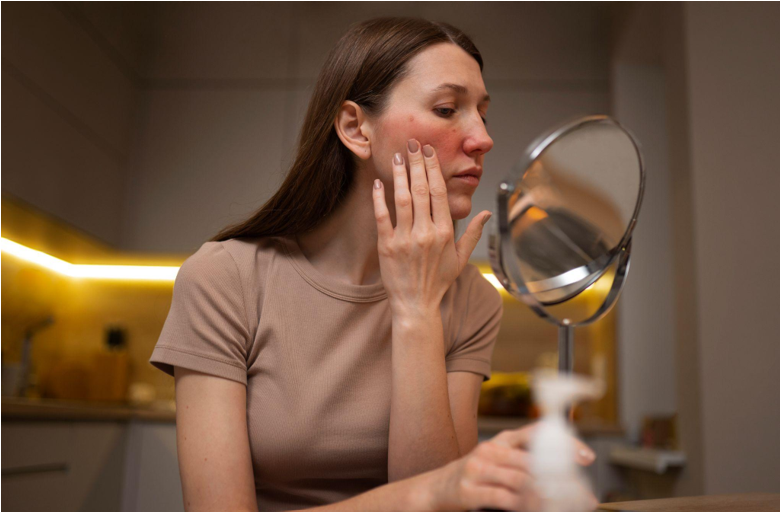
You wash your face every day. Maybe twice. You’ve tried different cleansers, added an exfoliant, and still — the breakouts keep coming back. If that sounds familiar, you’re not alone. Many people assume acne is just about oil or bacteria, but there’s another factor that doesn’t get enough attention: the buildup of dead skin cells. Understanding this piece of the puzzle can change the way you approach your skin entirely.
What Dead Skin Cells Actually Do to Your Pores
Your skin renews itself constantly. Old cells move toward the surface, die, and shed — making room for newer cells underneath. This is a normal, healthy process. The problem starts when that shedding doesn’t happen evenly or efficiently. When dead skin cells accumulate on the surface, they don’t just sit there passively. They mix with sebum — your skin’s natural oil — and begin to block the opening of your pores. That blockage creates the ideal environment for acne-causing bacteria to multiply. What started as a natural skin process becomes a recurring cycle of clogged pores and inflammation.
Why Your Skin Barrier Plays a Bigger Role Than You Think
Most people focus on what’s clogging their pores, but fewer think about why the shedding process becomes irregular in the first place. The answer often comes back to the skin barrier. When your barrier is healthy, your skin regulates its own renewal cycle reasonably well. When it’s compromised — from over-cleansing, harsh products, or environmental stress — that regulation breaks down. The outer layer becomes uneven. Dead cells stick around longer than they should. Inflammation increases, which makes the pores more prone to blockages. So while dead skin buildup looks like a surface problem, it frequently signals something deeper going on with how your skin is functioning.
Common Mistakes That Make Dead Skin Buildup Worse

This is where a lot of well-meaning skincare routines go wrong. In an attempt to clear breakouts, people often reach for stronger products or more frequent exfoliation. That tends to backfire. Some of the most common mistakes include:
- Over-exfoliating with physical scrubs or high-strength acids, which strips the barrier and triggers more skin cell turnover and inflammation
- Using multiple active ingredients at once, which overwhelms the skin rather than helping it regulate
- Cleansing too often or with overly foaming cleansers, which disrupts the skin’s natural moisture balance
- Skipping moisturizer because skin feels oily, which causes the barrier to weaken further
Each of these approaches tries to force a result rather than supporting the skin’s own process. Over time, they tend to make breakouts more persistent, not less.
What Your Skin Actually Needs to Clear Itself
The goal isn’t to aggressively remove dead skin cells — it’s to support the conditions where your skin can shed them naturally and maintain a clear surface. That looks different from what most people expect. It’s quieter. More consistent. Less about adding powerful products and more about reducing the load on your skin. Gentle, regular exfoliation has its place, but it works best when the rest of your routine isn’t fighting against your barrier. Keeping skin hydrated, avoiding ingredient overload, and giving your skin time to adjust matters more than most people realize. Sustainable Acne Treatment isn’t about the most aggressive approach — it’s about the most balanced one.
How to Approach Your Routine Differently
If you suspect dead skin buildup is contributing to your breakouts, the shift is less about adding new products and more about reassessing what’s already there. Consider:
- Simplifying your routine to a gentle cleanser, a light moisturizer, and one targeted treatment
- Introducing exfoliation slowly — once or twice a week is enough for most skin types
- Prioritizing barrier repair before focusing on treating active breakouts
- Watching how your skin responds over several weeks, not days
Some approaches, like what Clear Ritual focuses on, are built around this exact idea — keeping routines minimal and barrier-friendly rather than stacking multiple actives that compete with each other. With consistent care, skin often starts to regulate itself more effectively.
Final Thoughts
Acne and clogged pores are rarely caused by one single thing, but dead skin cell buildup is a significant piece that often goes overlooked. The solution isn’t always more — it’s smarter. When you support your skin barrier and allow the natural renewal process to work as it should, breakouts tend to decrease over time without the need for harsh intervention. Simplicity, patience, and consistency are what your skin responds to most.
How Dead Skin Cells Contribute to Acne Breakouts and Clogged Pores
You wash your face every day. Maybe twice. You’ve tried different cleansers, added an exfoliant, and still — the breakouts keep coming back. If that sounds familiar, you’re not alone. Many people assume acne is just about oil or bacteria, but there’s another factor that doesn’t get enough attention: the buildup of dead skin cells. Understanding this piece of the puzzle can change the way you approach your skin entirely.
What Dead Skin Cells Actually Do to Your Pores
Your skin renews itself constantly. Old cells move toward the surface, die, and shed — making room for newer cells underneath. This is a normal, healthy process. The problem starts when that shedding doesn’t happen evenly or efficiently. When dead skin cells accumulate on the surface, they don’t just sit there passively. They mix with sebum — your skin’s natural oil — and begin to block the opening of your pores. That blockage creates the ideal environment for acne-causing bacteria to multiply. What started as a natural skin process becomes a recurring cycle of clogged pores and inflammation.
Why Your Skin Barrier Plays a Bigger Role Than You Think
Most people focus on what’s clogging their pores, but fewer think about why the shedding process becomes irregular in the first place. The answer often comes back to the skin barrier. When your barrier is healthy, your skin regulates its own renewal cycle reasonably well. When it’s compromised — from over-cleansing, harsh products, or environmental stress — that regulation breaks down. The outer layer becomes uneven. Dead cells stick around longer than they should. Inflammation increases, which makes the pores more prone to blockages. So while dead skin buildup looks like a surface problem, it frequently signals something deeper going on with how your skin is functioning.
Common Mistakes That Make Dead Skin Buildup Worse
This is where a lot of well-meaning skincare routines go wrong. In an attempt to clear breakouts, people often reach for stronger products or more frequent exfoliation. That tends to backfire. Some of the most common mistakes include:
- Over-exfoliating with physical scrubs or high-strength acids, which strips the barrier and triggers more skin cell turnover and inflammation
- Using multiple active ingredients at once, which overwhelms the skin rather than helping it regulate
- Cleansing too often or with overly foaming cleansers, which disrupts the skin’s natural moisture balance
- Skipping moisturizer because skin feels oily, which causes the barrier to weaken further
Each of these approaches tries to force a result rather than supporting the skin’s own process. Over time, they tend to make breakouts more persistent, not less.
What Your Skin Actually Needs to Clear Itself
The goal isn’t to aggressively remove dead skin cells — it’s to support the conditions where your skin can shed them naturally and maintain a clear surface. That looks different from what most people expect. It’s quieter. More consistent. Less about adding powerful products and more about reducing the load on your skin. Gentle, regular exfoliation has its place, but it works best when the rest of your routine isn’t fighting against your barrier. Keeping skin hydrated, avoiding ingredient overload, and giving your skin time to adjust matters more than most people realize. Sustainable Acne Treatment isn’t about the most aggressive approach — it’s about the most balanced one.
How to Approach Your Routine Differently
If you suspect dead skin buildup is contributing to your breakouts, the shift is less about adding new products and more about reassessing what’s already there. Consider:
- Simplifying your routine to a gentle cleanser, a light moisturizer, and one targeted treatment
- Introducing exfoliation slowly — once or twice a week is enough for most skin types
- Prioritizing barrier repair before focusing on treating active breakouts
- Watching how your skin responds over several weeks, not days
Some approaches, like what Clear Ritual focuses on, are built around this exact idea — keeping routines minimal and barrier-friendly rather than stacking multiple actives that compete with each other. With consistent care, skin often starts to regulate itself more effectively.
Final Thoughts
Acne and clogged pores are rarely caused by one single thing, but dead skin cell buildup is a significant piece that often goes overlooked. The solution isn’t always more — it’s smarter. When you support your skin barrier and allow the natural renewal process to work as it should, breakouts tend to decrease over time without the need for harsh intervention. Simplicity, patience, and consistency are what your skin responds to most.
- Advancements in Peptide Research and Laboratory Science
- When Should CPA Firms Outsource Bookkeeping Services During Peak Workloads?
- What Athletes Should Know About Joint Injections for Sports Injuries
- A Smarter Cash Cushion: Practical Ways Small Businesses Can Stay Ready for Uneven Revenue
- Choosing A Meaningful Day Program For Adults With Disabilities