


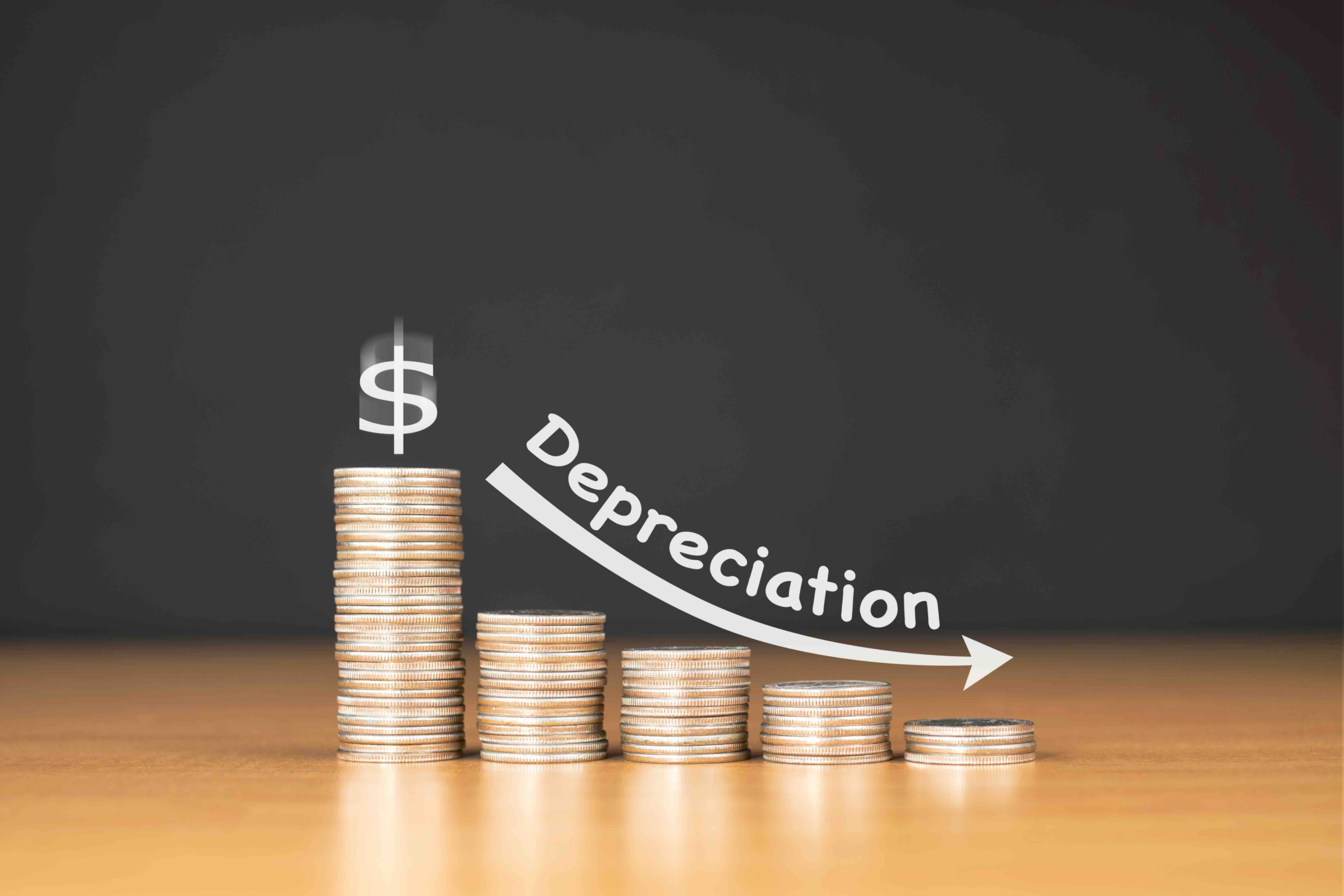
When the Rupee weakens against major global currencies, it does more than move the forex rate on screen. Currency depreciation changes import costs, export earnings, inflation and interest rate expectations, and all of that feeds into the stock market.
This article breaks down how a weaker Rupee can influence different sectors, portfolio returns and day-to-day stock trading decisions for Indian investors.
What Currency Depreciation Means for Equity Investors
Currency depreciation simply means the domestic currency buys less of a foreign currency than before. In other words, overseas goods, services and assets become more expensive in local terms.
For equity investors, this matters because listed companies are deeply tied to cross-border trade and capital. A weaker currency can reshape:
- How competitive exporters look abroad.
- How costly imported raw materials have become.
- How foreign investors view the risk and reward of investing in the local stock market.
So, even without checking the forex rate every day, an equity investor is indirectly exposed to currency moves through earnings, valuations and flows.
Transmission Channels Between Currency and Share Prices
When analysts study the impact of currency depreciation on the share market, they usually focus on a few key transmission channels.

- Corporate Revenues and Margins: Companies that earn a meaningful part of their revenue overseas may see those earnings translate into more domestic currency when the local unit weakens.
At the same time, businesses that depend heavily on imported inputs can face rising costs. The net effect on profit depends on how much of those cost changes can be passed on to customers.
- Inflation and Input Costs: A weaker currency makes imported fuel, machinery, technology and specialised components more expensive in local terms. Over time, this can push up general price levels.
Higher input costs squeeze margins in sectors that have limited pricing power, and investors watch how management responds through efficiency measures or price adjustments.
- Interest Rates and Liquidity: If depreciation feeds into inflation, the central bank may decide to keep policy tighter than otherwise. Higher funding costs can influence corporate borrowing, project viability and, eventually, earnings expectations.
The share market tends to monitor currency moves as a signal for the future interest rate path and system liquidity.
- Foreign Portfolio Flows: Global investors look at local equity returns after adjusting for currency movement. If they expect further depreciation, they may demand a higher return or reduce exposure.
That can affect broad indices, particularly in segments where foreign ownership is significant. On the other hand, once valuations adjust, some investors may see weakness in the currency and the stock market as an entry opportunity.
- Market Sentiment and Volatility: Sharp currency moves can act as a stress indicator. Even if fundamentals are unchanged, a swift fall in the domestic unit can trigger short-term caution in stock trading, widen bid-ask spreads and increase intraday swings.
This sentiment layer often sits on top of the more structural effects on earnings and flows.
Impact on Different Types of Companies
Not every listed business reacts in the same way to a weaker currency. Analysts broadly think in terms of economic exposure rather than only reported numbers.
- Export-Oriented Businesses: Firms that sell more abroad than they import might benefit from depreciation, particularly if their costs are mainly domestic. Their products become relatively cheaper in overseas markets in foreign currency terms, which can support volumes and margins, subject to competitive pressures and hedging policies.
- Import-Heavy Businesses: Companies that rely on imported energy, technology, components or capital goods can feel pressure on margins when the currency weakens. If demand is sensitive to price, it can be challenging to pass on the full impact to customers. In such cases, investors pay close attention to cost control, product mix and the ability to move gradually towards local sourcing.
- Domestic Services and Financials: Some sectors with mainly local revenue and limited direct import dependence may be affected more through second-order effects. These include changes in client confidence, funding costs, and shifts in household budgets due to imported inflation. The link with currency depreciation is real but often more indirect than in trade-heavy industries.
Foreign Investors and the Stock Market
Foreign institutions usually approach the local stock market with a combined lens: equity selection plus currency view. A period of depreciation changes this balance.
If currency weakness is seen as temporary and valuations are attractive, some investors may treat it as an opportunity to buy quality companies at a discount in global terms. If the weakness is associated with broader macro concerns, they may reduce exposure or move to more defensive sectors.
From a domestic investor’s angle, this means:
- Periods of sustained depreciation can be associated with net selling by foreign investors, adding pressure to indices and large liquid stocks.
- Stabilisation in the currency can help calm volatility and restore interest in growth sectors.
Understanding this dynamic does not require predicting global flows, but it helps explain why the stock market sometimes reacts strongly to currency headlines even when local news appears steady.
What Currency Moves Mean for Stock Trading
Short-term traders often feel currency moves more keenly than long-term investors. Depreciation phases can alter trading patterns in several ways.
In day-to-day stock trading, participants tend to:
- Watch sectors with clear trade or commodity linkages more closely, since earnings expectations can change quickly.
- Track companies that give management commentary on hedging, pricing and cost pressures.
- Adjust position sizes and holding periods when volatility rises around macro events.
Currency rebates can affect index strategies and hedges, and sector rotation concepts to traders dealing in derivatives. Local actions within the domestic unit may serve as indications of risk-on or risk-off periods, informing intraday or short-term trading strategies even in non-apparent global stocks.
For investors who are not active in short-term stock trading, the key takeaway is simpler: currency-driven volatility can be sharp but does not always change the long-term story of a fundamentally strong business.
Conclusion
Currency depreciation weaves through the share market in several ways: it alters company earnings, influences inflation and interest expectations, shapes foreign flows and colours sentiment during stressed periods. Export-linked sectors, import-dependent businesses and primarily domestic players all feel the impact differently, and the stock market reflects these differences in prices and sector performance.
For Indian investors, the most helpful approach is to understand these channels clearly, recognise how they show up in stock market behaviour, and then align decisions with personal risk tolerance and time horizon. That way, currency headlines become a prompt for deeper analysis rather than a trigger for rushed reactions, and both investing and stock trading choices can stay anchored to well-thought-out strategies instead of short-lived noise.
- Benefits of a Multidisciplinary Approach in Orthopedic Care
- A Simple Guide to Managing Monthly Repayments on a Personal Loan
- How Employers Can Build a Stronger Financial Wellness Benefit for Hourly Workers
- Dental Implants: A Clear Guide to Options, Candidacy, Costs, and Recovery
- A Child-Centered Plan for High-Conflict Co-Parenting